We use cookies to give you the best experience on our website. You can choose which cookies you want to allow below. You can find more details in our privacy policy.
These cookies are necessary for the site to work.
These cookies are used to measure the behavior of the website's users.
These cookies are used to build a profile of the website's users, e.g. to show targeted ads.
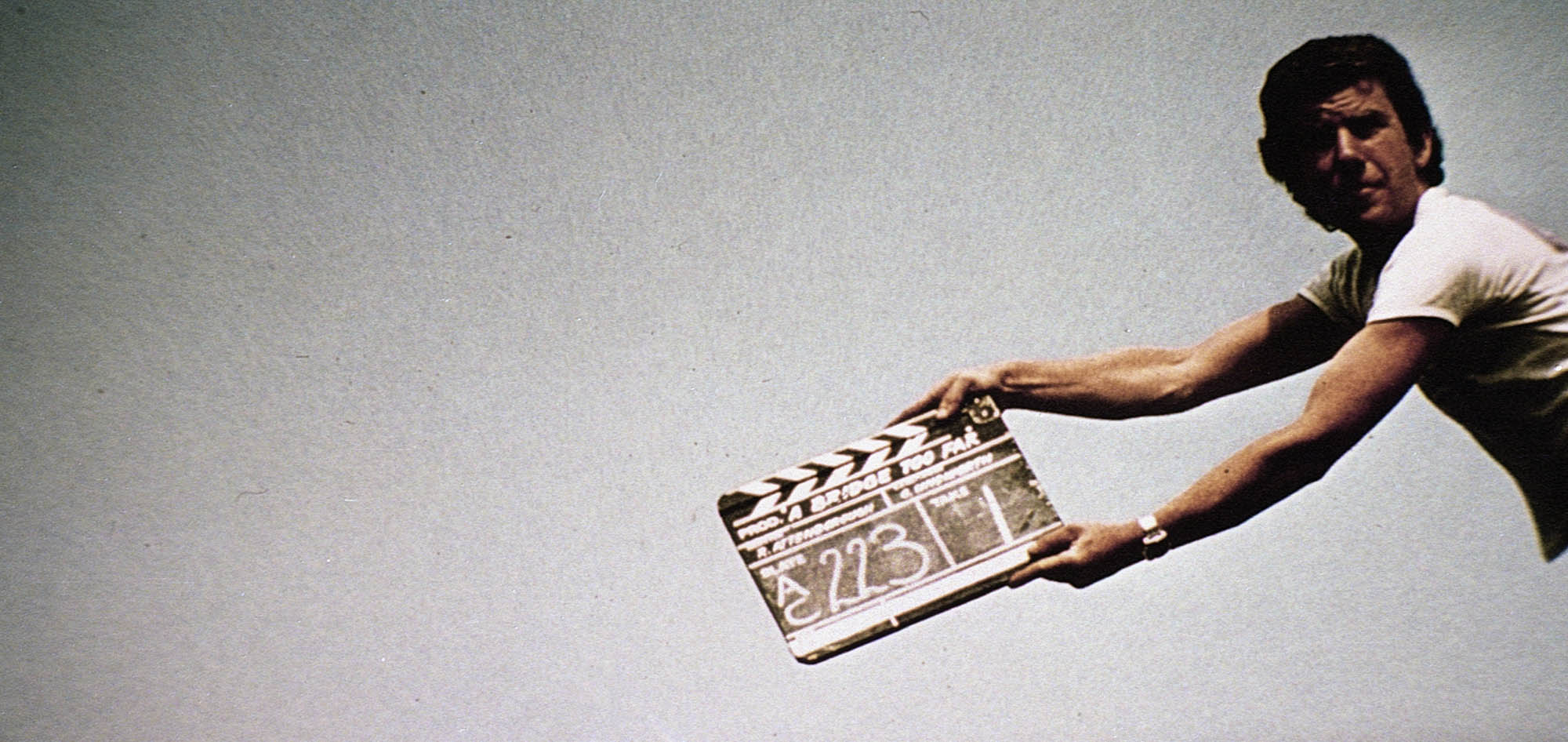
This year marks the 50th anniversary of the film production of the classic ‘A Bridge Too Far’ coming to Deventer. In 1976, the city was completely captivated by the bridge. The large-scale film adaptation of Operation Market Garden attracted no fewer than fourteen international film stars, including Sean Connery and Anthony Hopkins, to the city.
From 28 March 2026, Museum De Waag will be celebrating the filming of what was then the most expensive film of all time with an exhibition at De Waag. The celebrations will also include city walks to film locations, storytelling sessions and special VIP evenings with free admission. In addition, a richly illustrated book containing stories and memories of the film will be published. Meanwhile, the museum is exploring the possibility of installing a commemorative plaque on the bridge.
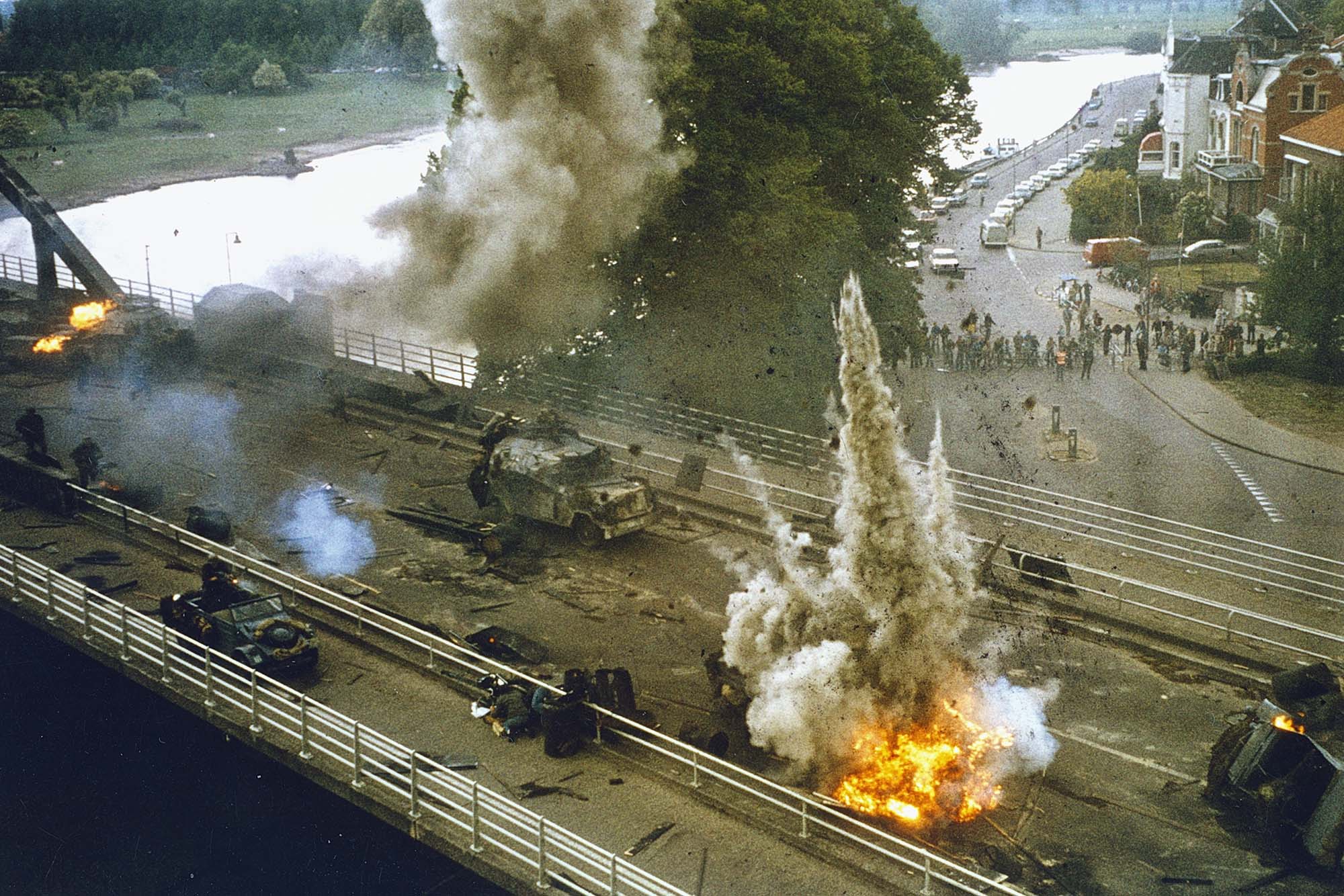
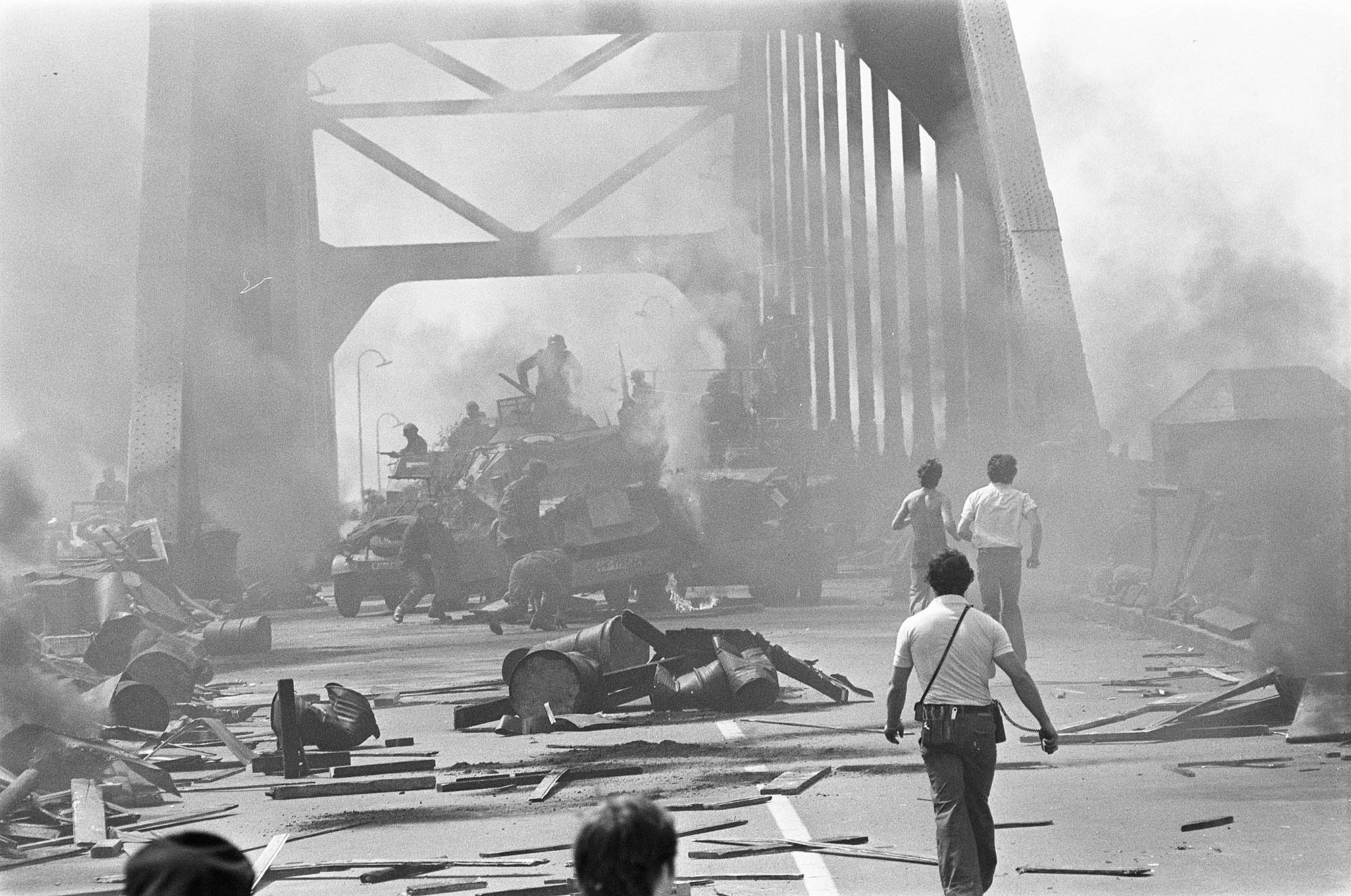
Filming for *A Bridge Too Far* in Deventer. Soldiers crossing the bridge on 18 May 1976 (Photo by Rob Mieremet, Anefo and the National Archives)
In 1976, Deventer served as a film set because Arnhem, the actual theatre of operations for the Second World War’s ‘Market Garden’ operation, had been so thoroughly modernised after the war that its historic character had largely been lost. Deventer, by contrast, offered an authentic, austere and slightly dilapidated urban setting. The fact that the Wilhelmina Bridge in Deventer bore a strong resemblance to the Arnhem Rhine Bridge made the city the most suitable setting.
A crowd gathers around a petrol station in the Zandweerd district of Deventer (Photo: Gilde Deventer image archive)
For many residents, it was a remarkable period in which the everyday cityscape was suddenly filled with hundreds of vehicles, thousands of extras, and enormous sets and explosions. The film, directed by Richard Attenborough, became the most expensive film production of its time and continues to leave its mark on the city’s collective memory to this day.
Special effects on the Wilhelmina Bridge in Deventer (Photo: Gilde Deventer image archive)
Exhibition From 28 March 2026, Museum De Waag will be presenting the exhibition ‘A Bridge Too Far, Hollywood in Deventer’. The exhibition takes you back to the time of those historic film shoots. Through photographs and videos from the Gilde Deventer Image Archive, props from the film and personal stories, you will learn a great deal about the impact the film had on the city and its inhabitants.The exhibition is made possible in part by the Municipality of Deventer, the VSB Fund, the Sluyterman van Loo Fund and the Overijssel Cultural Fund.
Filming for *A Bridge Too Far* in Deventer. Soldiers crossing the bridge on 18 May 1976 (Photo by Rob Mieremet, Anefo and the National Archives)
A wide-ranging programme The exhibition is accompanied by a series of storytelling sessions. Eyewitnesses are invited to share photographs, documents, film clips and personal anecdotes. To mark the fiftieth anniversary of ‘A Bridge Too Far’, a special publication about the – according to some – sleepy provincial town that quite by chance became part of an international film adventure and gratefully let itself be swept along by it is a must. The programme also includes a special city walk that takes visitors past various film locations in Deventer.
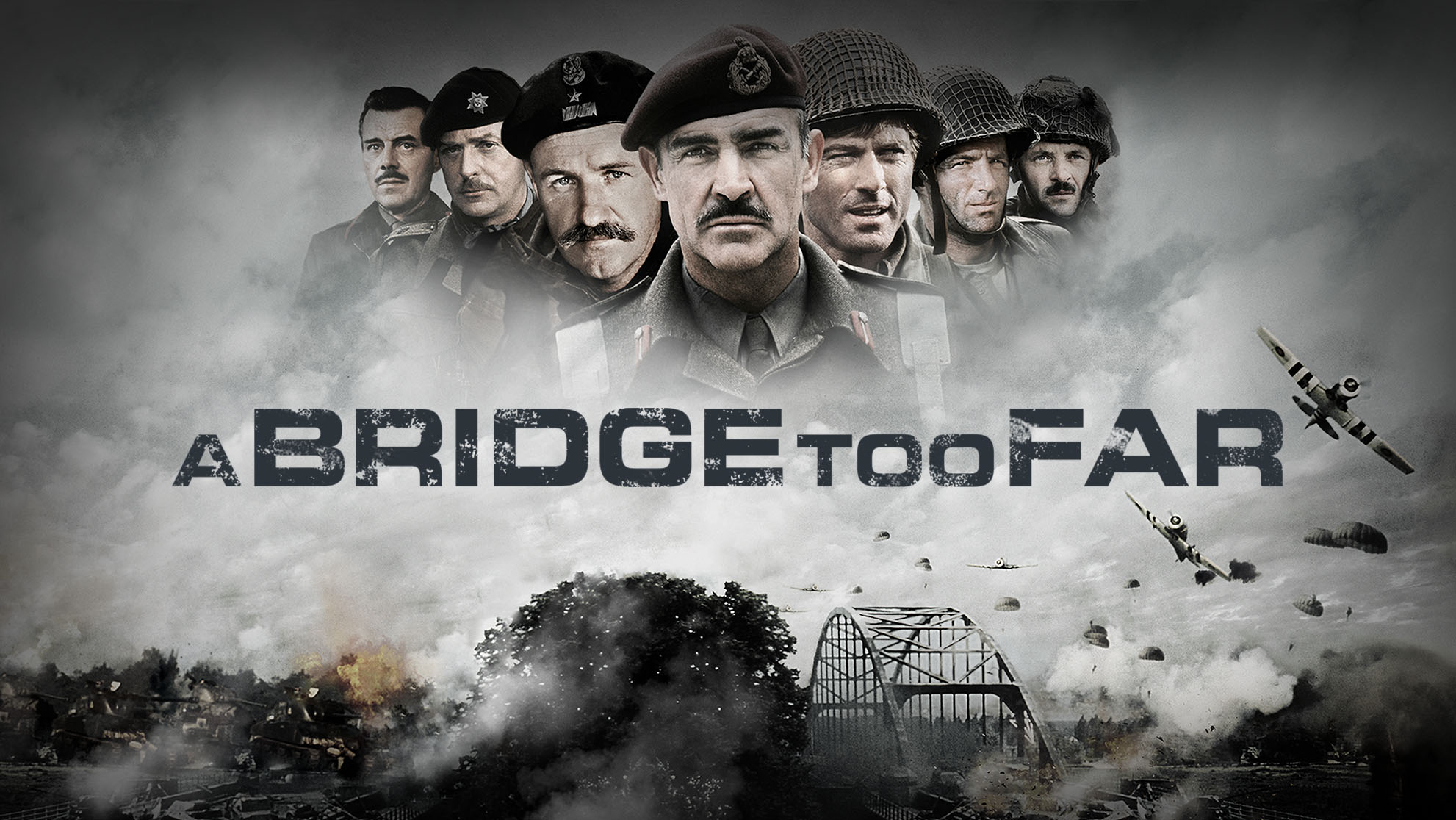
In 2026, it will be 50 years since the film A Bridge Too Far was filmed in Deventer. That’s why you can become a filmmaker yourself at Museum De Waag.
Create your own film using the miniature landscape in the museum’s basement as a backdrop. Use the figurines and the landscape to bring your story to life. For example, you could make a stop-motion film: take a photo at a time, moving the figures just a little bit each time. When you put all the photos together, it looks as though everything is moving. But you’re also free to do it entirely your own way.
As the director, you decide what appears on screen: the scenery, the characters, and the locations that tell your story. You can also continue working at home or combine different locations. This way, you make a film that is entirely your own.
Send us your video and feel free to share it on social media using the hashtags #museumdewaag, #abridgetoofar, #ABTF and #hollywoodindeventer.
We’ll be showing the best videos on the big screen at MIMIK. And you might even win a cinema ticket.
Rules
Film: maximum 5 minutes Please include your name, email address and a brief description of your film and your choice Entries must be submitted by 1 September 2026
Disclaimer By submitting a video, you give Deventer Verhaal and/or Museum De Waag permission to view and assess your video and – if it is selected – to screen it during the programme at MIMIK (including distribution via our website(s) and social media). Your name may be mentioned in this context. We will use the contact details you provide solely for this campaign and will not store or share them further afterwards.
Let's get started: making a film prop
You do not need a museum ticket for this activity.
On Sundays 3 May, 7 June, 5 July, 2 August and 6 September 2026, you are warmly welcome to the basement of Museum De Waag from 11:00 to 13:00 to make your own film props or miniature set. Fifty years ago, Deventer was the setting for the war film A Bridge Too Far. Now it’s your turn to create your own film landscape and/or film prop.
Do you want to bring an exciting or tragic story to life, reflect on modern-day wars, or perhaps re-enact a comical moment? Now’s your chance to be a director! You can use the miniature landscape in the museum’s basement as a backdrop for your film, but you’re also welcome to head out into the city, continue filming at home, or combine the two. This way, you can give your film your own unique style and choose which locations and images best enhance your story.
Share your creation on our social media using the hashtags #abridgetoofar or #museumdewaag for a chance to win a cinema voucher and a special A Bridge Too Far souvenir. You can also share your creation via info@deventerverhaal.nl.
VIP evenings
To mark the 50th anniversary of *A Bridge Too Far*, we are organising VIP evenings throughout the exhibition. Feel like a real Hollywood star as you walk down our red carpet into the museum.
Our VIP evenings are free to attend from 4 pm to 8 pm on:
7 May
18 June
9 July
8 October
5 November
Storytelling sessions
A Bridge Too Far represents a unique chapter in Deventer’s history. Even if you have no personal recollection of it, you’re bound to know a relative, neighbour or colleague with a good story about the time Deventer was transformed into a Hollywood film set.
Fifty years on, we are reflecting on this unique moment in Deventer’s history. Join us on a journey back to Deventer in 1976 during an ‘A Bridge Too Far’ storytelling afternoon. Several speakers will share their personal memories. There will also be an opportunity for stories from the audience. Perhaps it will be your story?
Thursday 5 March 2026 Groote Voorster Care Home, 2.00 pm – 4.00 pm
Thursday 19 March 2026 Deventer City Centre Library, 7.30 pm – 9.30 pm. Book a place
Thursday 28 May 2026 Huize Salland Care Home, 2.00 pm – 4.00 pm
Thursday 25 June 2026 Deventer City Centre Library, 7.30 pm – 9.30 pm
Attendance at the storytelling evening is free of charge. Please note: places are limited. Advance booking is required.
The storytelling event is a collaboration between Raster, the heritage organisation Deventer Verhaal and the storytelling team #DeventerVerhalen.
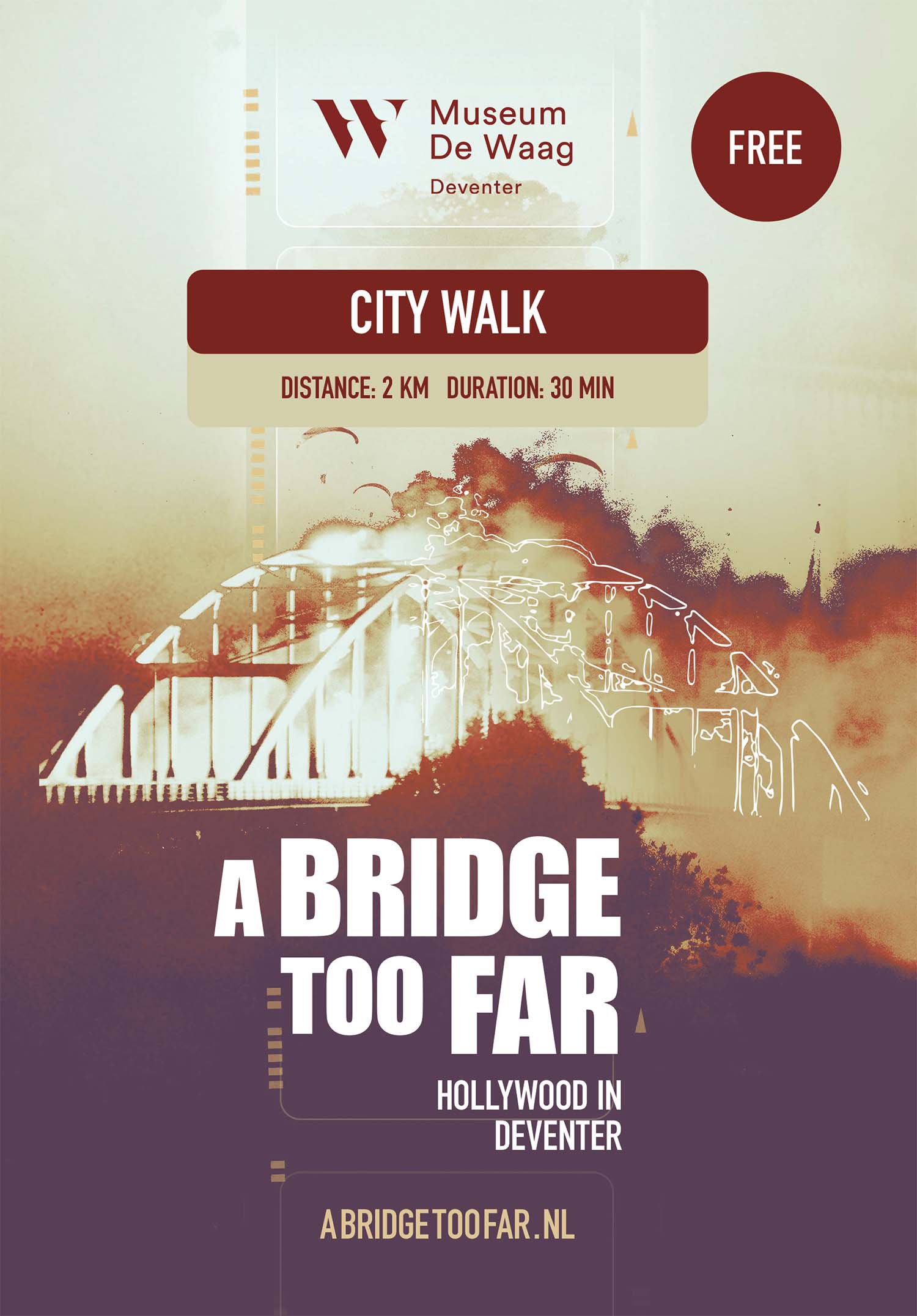
City walk: A Bridge Too Far, Hollywood in Deventer
In 1976, Deventer served as the setting for the classic film *A Bridge Too Far*. The film, based on the book of the same name by Cornelius Ryan, tells the story of the Allied offensive known as Operation Market Garden, which took place in September 1944 and came to a halt at the Rhine bridge in Arnhem.
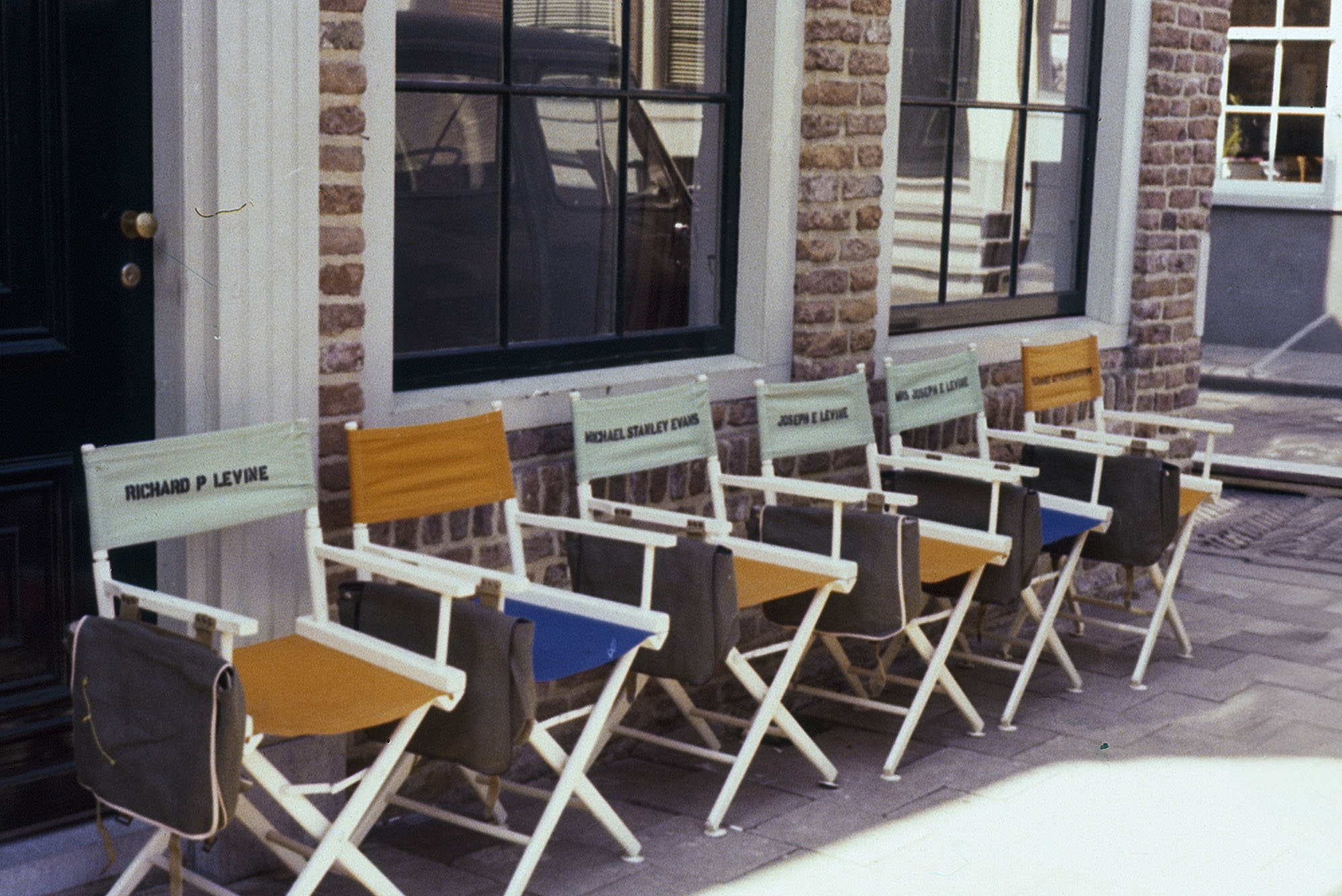
Film producer Joseph E. Levine moved to Deventer for the filming of *A Bridge Too Far* after Arnhem proved unsuitable. What followed was an unforgettable summer in which Deventer was swept up in the excitement of a massive film production.
Take a walk past the locations in Deventer that featured in the filming of A Bridge Too Far.
In 1976, the filming of the war film A Bridge Too Far temporarily transformed Deventer into the setting for an international film production. What some considered to be a quiet provincial town was, for months, turned into a bustling film set where a major Hollywood project came to life.
From April through September 1976, the city was entirely dominated by the film shoot. For many residents, it was a unique experience: their own Wilhelmina Bridge was set on fire for the film, tanks drove through the streets, and the sound of explosions and machine guns could be heard regularly.
Through these spectacular scenes, the film sought to portray the events surrounding Operation Market Garden in September 1944 as realistically as possible. Deventer thus played a prominent role in one of the best-known films about the Second World War.
In September 1944, the Allies launched a daring operation to continue their rapid advance across Europe: Operation Market Garden. The plan was ambitious. Through a combination of airborne landings and a rapid advance by ground troops, the Allies aimed to capture the bridges between Eindhoven and Arnhem and thus push on to the German Ruhr region, the industrial heart of Nazi Germany. Some planners even hoped that the Second World War would be over by Christmas 1944.
On 17 September 1944, thousands of American, British and Polish paratroopers jumped from aircraft that had flown from England to the Netherlands. Their mission was to secure strategic bridges near Eindhoven, Nijmegen and Arnhem, amongst other places. At the same time, Allied ground forces advanced from the south to reinforce the paratroopers.
The operation got off to a promising start, with the liberation of Eindhoven on 18 September. However, it soon became clear that German resistance was stronger than anticipated. A blown-up bridge near Son had to be repaired first, radio communications were poor, and strong German units in the Veluwe region slowed the advance.
Near Arnhem, a battalion led by John Dutton Frost managed to capture the northern side of the Rhine bridge. From houses near the bridge, the British paratroopers held their ground against the German troops for days. However, no reinforcements arrived. Eventually, the remaining soldiers were forced to surrender and the bridge fell back into German hands. Arnhem proved to be, quite literally, A Bridge Too Far.
The failure at Arnhem marked the end of Operation Market Garden. In total, there were around 17,000 Allied casualties.
From history to book and film
The dramatic events of September 1944 gained international recognition through Cornelius Ryan’s book *A Bridge Too Far*. Drawing on interviews and correspondence with some 1,500 people involved, Ryan reconstructed the ambitious but failed operation.
Even before the book was fully completed, film producer Joseph E. Levine became interested in adapting it for the screen. Levine had previously enjoyed great success with films such as Hercules and The Graduate. For his new project, he wanted to go all out once again.
Levine chose Richard Attenborough to direct. Although Attenborough had relatively little experience as a director at the time, Levine saw him as the right person to turn the film into more than just an ordinary war film. The screenplay was written by the famous screenwriter William Goldman.
Why Deventer was chosen as a film location
A practical problem arose during the preparations. The area around the Rhine Bridge in Arnhem had been largely rebuilt after the war and looked too modern to convincingly portray Arnhem as it was in 1944.
Whilst searching for a suitable location, Levine ended up in Deventer. The town proved to be an ideal alternative. There was plenty of space around the Wilhelmina Bridge for a film set, and in some places the buildings still bore a strong resemblance to those of the 1940s.
In the summer of 1975, Levine first contacted the municipality of Deventer and the Department for Transport, Public Works and Water Management. He made it clear that, in his view, Deventer was the best location for filming the movie realistically.
A great opportunity for Deventer
For the city, the request was unusual, but also appealing. At the time, Deventer was struggling with financial difficulties and was known as a so-called ‘Article 12’ municipality. The arrival of an international film production could therefore provide a significant boost to publicity and the local business community.
The preparations, however, were extensive. Working groups were set up, public hearings were organised, and the plans had to be approved by the city council and the minister. Finally, in September 1975, the official decision was made: the film *A Bridge Too Far* would indeed be shot in Deventer.
Filming in Deventer (1976)
Filming took place from April to September 1976. Although the Wilhelmina Bridge played a key role, scenes were also shot at other locations in and around Deventer. For months, the town was transformed into a huge film set, complete with military vehicles, explosions and temporary film sets.
For Deventer, the production of A Bridge Too Far marked a unique period in which history, film and the city came together.
On 16 August 1976, the Brink was packed with jeeps. Parking meters and lampposts had been removed, as they did not exist thirty years ago. That morning, a jeep carrying actor Edward Fox drove smoothly from De Waag towards Golstraat. Fox played General Horrocks, and in the film the Brink stands in for the Belgian town of Leopoldsburg, where Horrocks explained to the ground troops in 1944 the immense operation that lay ahead of them.
This content cannot be displayed
In order to show this content, we need your consent to store marketing cookies.
Just under a week later, on Sunday 22 August 1976, the Brink was once again at the heart of the film. This time, the square stood in for Eindhoven, where the liberation took place on 18 September 1944. It was to be a massive scene, for which over a thousand extras had signed up.
On the day of filming, Attenborough was delighted with the huge turnout. It was great to see that all the hairstyles and clothing had been meticulously recreated to match those of 1944. But he felt it all needed to be much more exuberant. “You’ve just come through five years of war. You’re allowed to be a bit more enthusiastic!” he bellowed across the Brink.
The crowd cheered, louder and louder. The barrel organ ‘De Turk’ played ‘Oranje Boven’ non-stop. A sea of orange and red, white and blue moved past De Waag. A parade of armoured vehicles and jeeps was greeted with cheers and waving. Amidst all the orange euphoria, a dialogue ensued between Colonels Stout and Vandeleur, played by Elliott Gould and Michael Caine. Naturally, this scene had to be repeated over and over again. Nobody minded. Those who couldn’t take part stood behind the barriers at the Bergkwartier. The crowd watched as the past came alive on the Brink and new history was being written. For the film and for the city.
This content cannot be displayed
In order to show this content, we need your consent to store marketing cookies.
Luxor
The scene in which General Horrocks addresses his troops was filmed in the main auditorium of the former Luxor cinema. Standing before a huge map, Horrocks rouses the audience’s enthusiasm for the plan involving thousands of paratroopers, the bridges to be captured, and the chance to defeat the enemy once and for all in a swift operation. Not an easy operation, he admits. But an adventure he wouldn’t miss for the world. ‘A story you’ll tell your grandchildren.’
This content cannot be displayed
In order to show this content, we need your consent to store marketing cookies.
The European premiere of *A Bridge Too Far* took place in the same hall on 21 June 1977. It was an evening of mixed feelings. Following a festive farewell in October 1976, relations between Joseph Levine and Deventer had become severely strained. Of the previously agreed plan to hold the world premiere in Deventer, all that remained in the end was the first European screening, one day before the gala premiere in Amsterdam.
The exact reason for this outcome has never been entirely clear. Once he had left, Levine proved harder to reach than during his stay on the banks of the IJssel, even though there were still matters to be settled. For instance, the council had sent Levine a proposal for the theatre’s refurbishment, to prepare it for the promised world premiere.
Levine, for his part, finally announced after a long silence that Deventer had made enough money from him and claimed he had never agreed to any renovations for a world premiere for which Deventer would not be a suitable venue at all.
Church Lane
The corner of Kerksteeg served as the backdrop for a dramatic scene in which a resistance leader leaves his deceased son behind. Filming in Deventer always attracted a large crowd. Even whilst filming in Kerksteeg, the actors were closely watched by a curious crowd.
This content cannot be displayed
In order to show this content, we need your consent to store marketing cookies.
For the people of Deventer, it was and remains virtually impossible to view *A Bridge Too Far* in isolation from their town and its residents. Leny Stappers, who also appeared as an extra on the Brink, said: “When I saw the finished film, I couldn’t really get into the story, because I kept seeing familiar faces and familiar locations in Deventer. In the film, you see an old lady walking alone down a narrow street between houses that have been shot to pieces. This should have evoked a sense of pity in me, but all I could think was: hey, there’s Toet walking there.”
Bergschild & Rijkmanstraat
Monday 26 April 1976 was the day. At a quarter to ten in the morning, Richard Attenborough’s voice boomed through the Bergkwartier via a megaphone. It wasn’t by the bridge, but here that the first scene of A Bridge Too Far was filmed in Deventer.
Cameras and lights were set up. Male extras were dressed as German soldiers. Women were dressed as ‘Moffenmeiden’ or ‘Grijze Muis’ – terms used at the time to refer to German soldiers. The plan was to film a scene in which a procession of dejected Germans marches out of Arnhem.
In the script, it was a simple walk. Down Menstraat, across Bergschild and into Rijkmanstraat. In practice, however, it was a meticulous operation, as the extras discovered. Their day began as early as half past six in the morning in Twello, where they were dressed and, where necessary, had their hair cut. They had to rehearse the walk countless times.
Herman Remmelenkamp was one of the extras and says: “As a soldier, I just had to lie on the street. We were given instructions through a megaphone: ‘silence’, then a clapperboard and ‘action’. Those takes were repeated four or five times. No idea why. They didn’t explain why a scene had to be reshot. I think we were on set for about six hours on my first day of filming. It mainly consisted of waiting, waiting and doing it all over again. Food and drink were provided. I particularly remember the delicious pastries from a well-known Deventer bakery.”
By midday, the scene was finally in place and the film crew were able to continue with the interior shots at 48 Rijkmanstraat. In the finished film, this is the first scene in which the bridge can be seen, hidden in the distance. In the reflection of the window through which actor Erik van ’t Wout is looking, soldiers are trudging out of the city.
On this first day of filming, Deventer brilliantly took on the role of Arnhem.
This content cannot be displayed
In order to show this content, we need your consent to store marketing cookies.
Assenstraat
For the very last outdoor scenes filmed in Deventer, on 23 September 1976, all that was needed was a pile of rubble in and around several streets in the city centre, including Burseplein, Muggeplein and Assenstraat. Combined with the requisite smoke and flames, this was enough to make it look like the smouldering ruins of Arnhem in September ’44. The filming in Assenstraat, which incidentally was not used in the film, was one of the last in the city of Deventer, where by then nobody batted an eyelid at clouds of smoke and the sound of gunfire. The previously boundless tolerance for all the bells and whistles was beginning to wane somewhat. Curious onlookers who did turn up to watch the goings-on saw a sign hanging at the cordon in front of Assenstraat: “Ter Hoeven Verf open despite the film. Don’t let the tanks put you off.”
Levine had initially set his sights on Deventer because of the Wilhelmina Bridge, but he also made it clear fairly quickly that the then rather dilapidated parts of Deventer’s town centre had caught his interest. And sometimes the crew got lucky, too, when it came to finding dilapidation at a bargain price. When one of the set houses accidentally caught fire on 15 June 1976, one camera kept rolling just to be on the safe side whilst the fire was being put out. Beautiful shots of a sea of flames always come in handy in a war film. Something similar happened after a real fire at the former Burgers bicycle factory on Rozengaarderweg. The demolition company was asked to hold off on clearing the site for a while. First, the crew quickly drove a tank through the remains of a charred wall.
This content cannot be displayed
In order to show this content, we need your consent to store marketing cookies.
Polstraat
To reach the bridge, Anthony Hopkins (playing General John D. Frost) led his men through Polstraat. For his role, Anthony Hopkins was able to count on advice that was as unique as it was valuable. Frost, who as a lieutenant-colonel actually commanded the battalion of British paratroopers during the Battle of Arnhem, had travelled from his sheep farm in England to Deventer at the invitation of Attenborough and Levine.
He spent the night in a camper van on the Worp. He told the Deventer Dagblad that he felt it was important for A Bridge Too Far to be a realistic war film, so that the whole world could see how Operation Market Garden had unfolded. He had gladly accepted the invitation to act as an advisor. This allowed him to explain to Hopkins that he should run less fast, otherwise the enemy would think he was afraid of them. Alongside Frost, the real General Gavin, General Horrocks, Urquhart and Brigadier Vandeleur were also on hand to provide the film crew, including the actors, with military advice.
Thumb gate
With the bridge in the background, Duimpoort also provided a fitting backdrop for that same stealth scene. If you look closely, you can see a wall in the scene that isn’t actually there in reality. It was a set wall, complete with propaganda posters.
This content cannot be displayed
In order to show this content, we need your consent to store marketing cookies.
Bookings
With life-size set houses lining the bridge, Deventer was transformed into Arnhem in 1944. The houses were made of wood, so they could easily be shot to pieces during filming.
Four months before filming began on and around the bridge, British craftsmen started building the houses. The workshop used for this purpose was the warehouse of the former Davo fireplace factory, located in the industrial estate further down the road.
Hundreds of photographs hung on the walls of the warehouse, alongside a full-scale model. These served as examples to guide the specialist set builders in their work. The photographs mainly showed the façades of buildings in Deventer city centre. A suitable ornament was recreated in plaster based on the example and incorporated into the wooden set. The model showed the situation at the bridge, as it will soon appear. The bridge itself and the Arnhem houses on either side were modelled in great detail. Even the Panoramaflat had been recreated, so that it could be seen in advance how it would be kept out of the picture.
The big boss on the Davo sets was Terry Marsh, a highly experienced production designer who had previously won two Oscars for his work. Much of the material needed for the set houses came from businesses in Deventer. Verenigde Houthandel ’t Noord-Oosten B.V. did a roaring trade with Marsh. Timber merchant P. Stoffel also saw orders pouring in, followed almost immediately by payment. Levine thus kept his word to do business with Deventer’s local businesses.
In the second week of February, the enormous wooden panels were mounted on foundations on either side of the bridge, in Emmastraat and Bokkingshang. As the set houses rose up like giants along the bridge, the area around the bridge took on a completely different appearance. Deventer was transformed into a film set. In the period that followed, the houses attracted a great deal of attention. After two months of filming, the wooden set houses had been reduced to a wreck, exactly as Levine had intended for his war film.
This content cannot be displayed
In order to show this content, we need your consent to store marketing cookies.
Wilhelmina Bridge
The star of *A Bridge Too Far* was the Wilhelmina Bridge. To film all the action, during which the flames sometimes rose above the arch, the bridge was closed twice for a week. A leaflet entitled Deventer Filmstad was distributed door-to-door, listing the final dates on which the Wilhelmina Bridge would be closed: from 16 to 24 May and from 14 to 21 June.
During the first week the crew had the bridge at their disposal, intense battle scenes were filmed. In the finished film, these are the sequences in which Frost and his troops open fire on the German enemy, who respond with heavy anti-tank guns. Clouds of smoke billowed from the bridge, which had been painted black in certain places to make it look even more battered. Promises to add war sounds later in the studio appeared to have been forgotten. Spectators could hear the rattling of machine guns, explosions and screeching steel from far away on the Welle. At other times, it was quiet again, or only voices could be heard coming from the megaphone.
Meanwhile, everyday life tried to carry on as normal during a week without the bridge. Temporary traffic lights and numerous diversions created a traffic puzzle that only a dedicated working group could make sense of. On the water, ferries handled the heavy traffic. Pedestrians and cyclists crossed free of charge on the boats operated by Rederij Smeets. Buses, emergency services and slow-moving traffic made the crossing via a military ferry. As agreed, the cycle path on the bridge was open to cyclists and pedestrians between 5.00 pm and 8.30 am, who, in their everyday clothes, curiously crossed the IJssel past the grim remains of a war scene.
Following two weeks of filming, the spotlight was turned on the bridge one last time in August for a night-time shoot in which the bridge was set alight. In his book, Cornelius Ryan described how the paint on the Rhine Bridge caught fire during the fighting. This distinctive detail of the Battle of Arnhem was therefore essential to the film adaptation. Afterwards, Deventer got the bridge back. Apart from a few minor damages, it had emerged from the battle unscathed.
This content cannot be displayed
In order to show this content, we need your consent to store marketing cookies.
Deventer Town Hall (Grote Kerkhof 4)
On 21 June 1976, filming took place at the town hall, just a stone’s throw from the Wilhelmina Bridge. The very place where Levine had presented his film plans to the council less than a year earlier proved to be the perfect setting for the headquarters of the German general Bittrich, played by Maximilian Schell.
This content cannot be displayed
In order to show this content, we need your consent to store marketing cookies.
Lebuinus Church & Grey Silo
The scene in which the generals discuss Urquhart’s fate and look back on the failed operation whilst gazing out over the Netherlands was also filmed in Deventer. Contrary to what the final film scene might suggest, the gentlemen were not standing on a church tower (the Lebuinus Tower in the film). This shot featuring the actors was taken a mile away, on the Grijze silo in the Havenkwartier.
This content cannot be displayed
In order to show this content, we need your consent to store marketing cookies.
Outside the centre of Deventer, there are two other places worth visiting:
Zandweerd
Battle scenes were filmed in the Zandweerd area near Gerard Ter Borchplein and Zandweerdsweg. On 17 September 1944, after landing west of Arnhem, Major-General Urquhart lost radio contact with the other battalions. To keep track of their advance towards the Rhine bridge, he decided to enter Arnhem, where he became trapped in a residential area. Surrounded by Germans, Urquhart spent 36 hours in hiding in the loft of a terraced house.
It took two sunny July days in 1976 to re-enact these events in Deventer. The location for this was the Zandweerd neighbourhood. Leaning in doorways, behind crowd barriers and from behind their windows, local residents watched as Sean Connery took cover along Gerard Ter Borchplein and fared better than his sergeant, who fell to the ground with a bullet in his body on the small lawn in front of their house. A day later, the adjacent Zandweerdsweg shook as the German tank rattled through it.
This content cannot be displayed
In order to show this content, we need your consent to store marketing cookies.
Het Schol
(Wilpsedijk 10, Wilp) serves as Hotel Hartenstein in the film, the headquarters of the British airborne troops. When filming began in Deventer in 1976, the film crew did not yet have a suitable location in mind. The real Hotel Hartenstein in Oosterbeek was not an option, as it was in use as a hotel and wished to remain intact. Whilst the crew were searching for a villa which, like the set houses, could be transformed into a ruin, the local council directed them to Het Schol.
The similarities between Het Schol and Hotel Hartenstein were striking. In the weeks that followed, the building on Wilpsedijk underwent a major refurbishment. Large letters gleamed above the entrance: Restaurant Park-Hotel Hartenstein. A few months later, little remained of it. By the end of the film, Het Schol looks like a ruined, charred-black ruin.
This content cannot be displayed
In order to show this content, we need your consent to store marketing cookies.